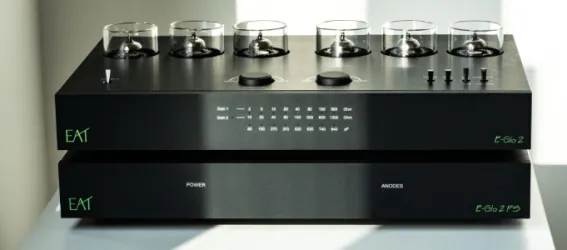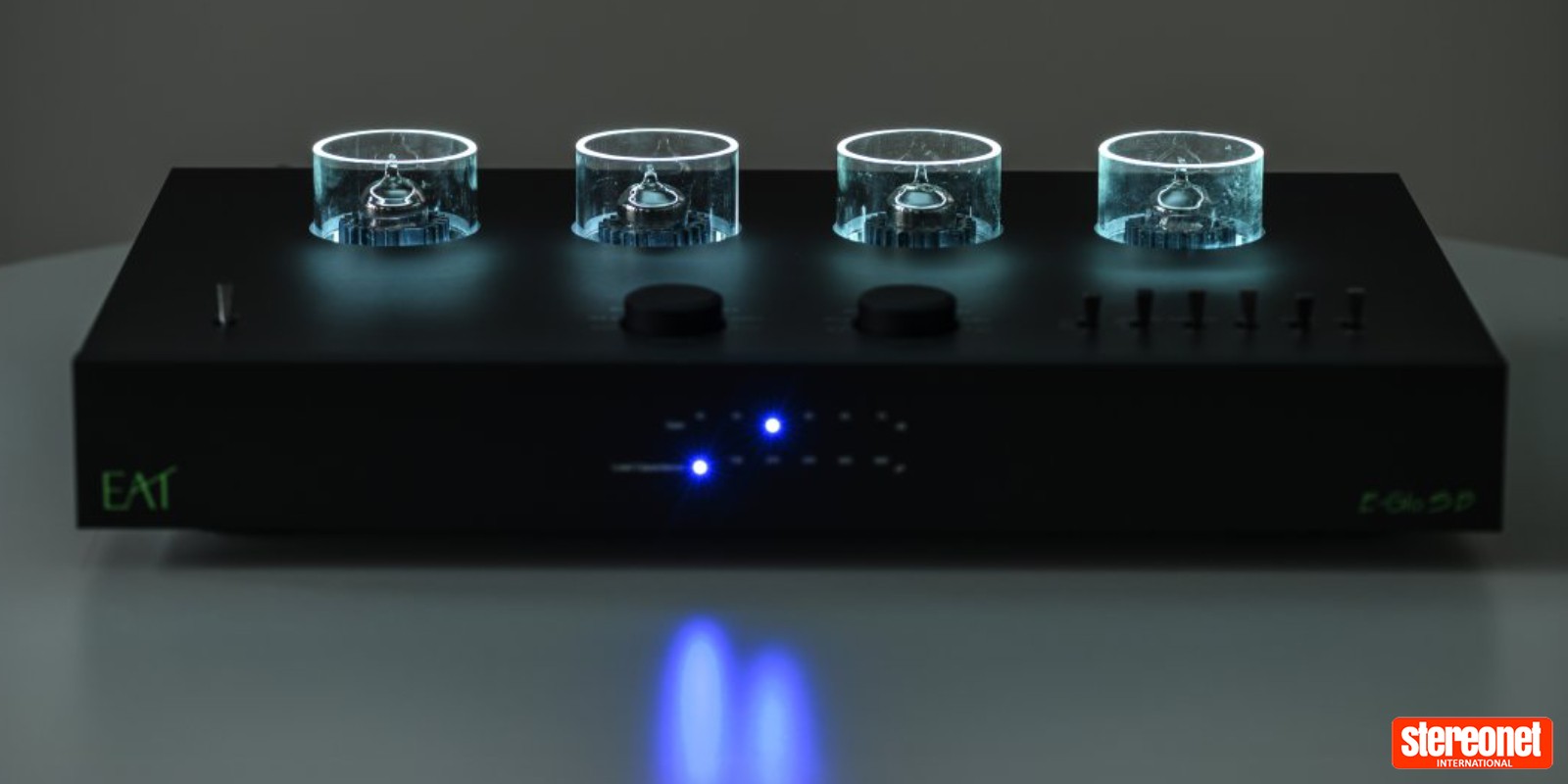
EAT (European Audio Team) has expanded its balanced phono stage range with the E-Glo SB and E-Glo CB, with both models apparently borrowing from the flagship E-Glo FB and bringing fully balanced phono amplification, balanced XLR connections and discrete circuitry to less expensive points in EAT’s line-up.
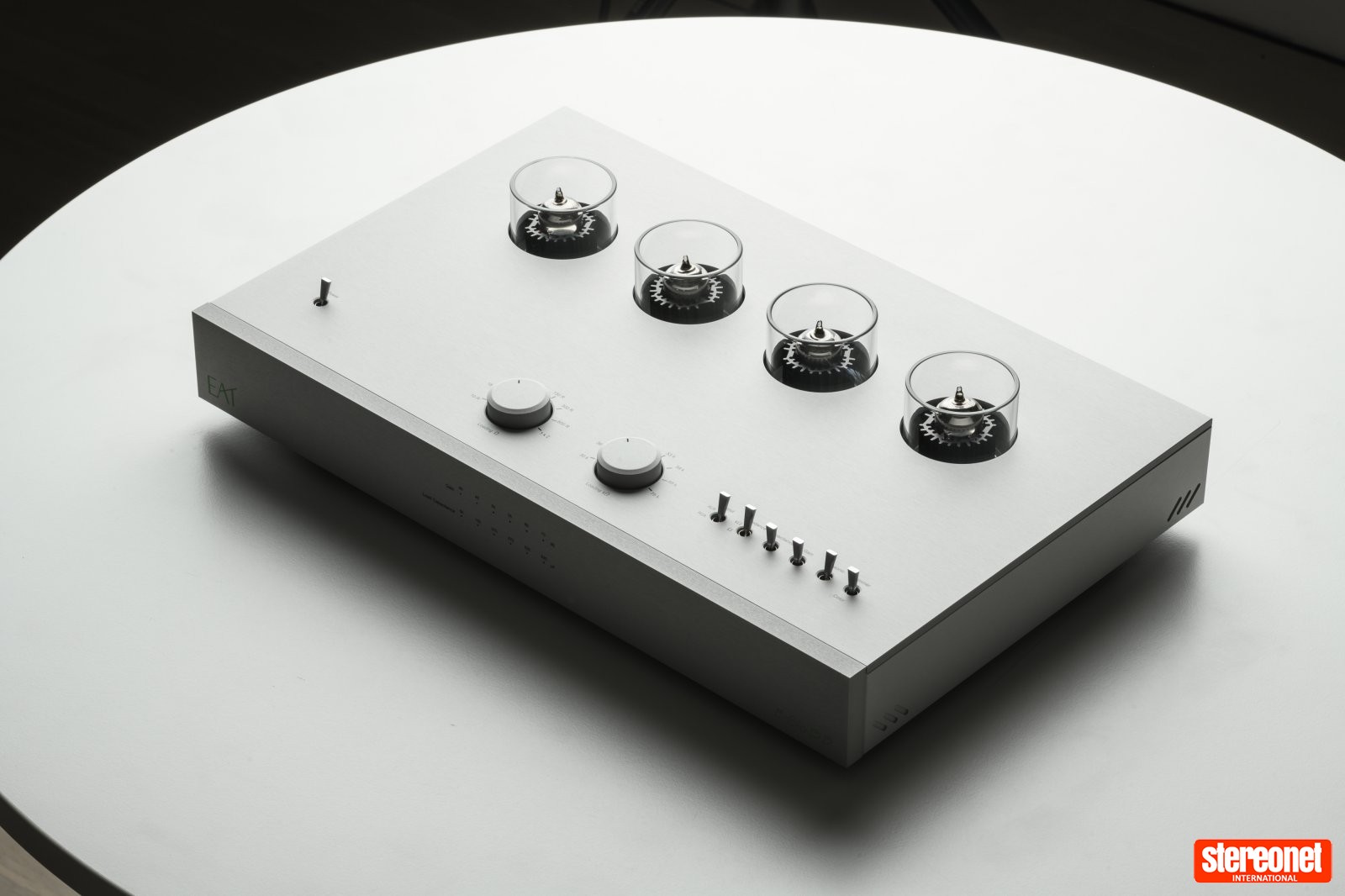
The two models sit between the compact Petit B and the reference E-Glo FB in EAT’s balanced phono stage family. Each uses a full-width chassis and is built around a dual-mono layout, with three gain stages, discrete components rather than integrated-circuit op-amps, split passive and active RIAA equalisation, and dedicated DC servo circuitry to reduce output offset.
The “B” badge denotes EAT’s balanced architecture, including balanced XLR input and output connections and symmetrical gain stages. This will come as no surprise to those who know how closely linked EAT is with Pro-Ject.
The Same, But Different
The E-Glo CB takes a value-focused route with a hybrid tube design, while the E-Glo SB moves closer to the flagship with a fully tube-based second amplification stage and upgraded parts.
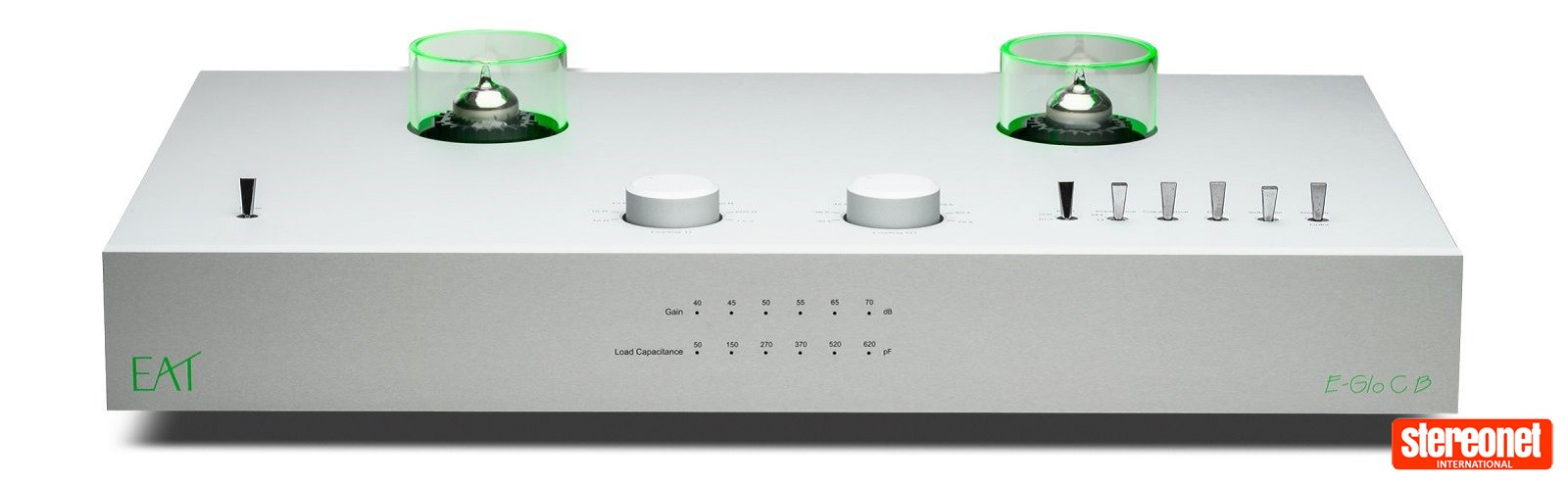
Both stages accept moving-coil cartridges through their balanced XLR inputs. Their RCA inputs work with both moving-magnet and moving-coil cartridges, and the balanced XLR and single-ended RCA outputs can be used simultaneously.
The first gain stage uses three discrete semiconductor amplifier circuits. One handles the positive phase, another handles the negative phase, and a third uses both to reject common-mode noise. The high-frequency part of the RIAA equalisation is applied here too.
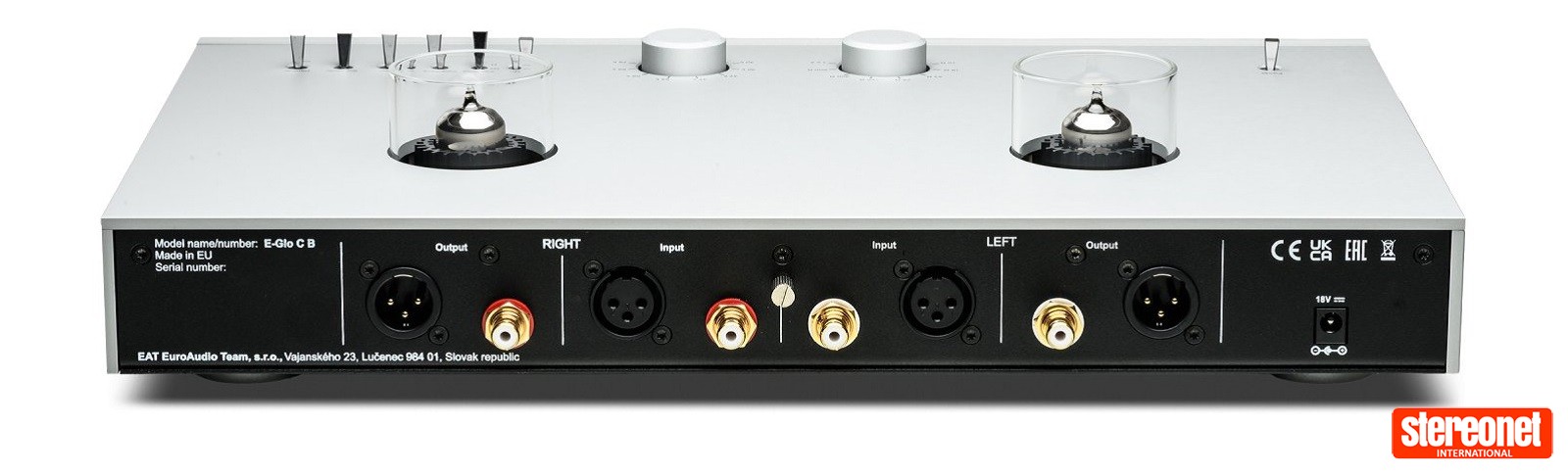
EAT reserves the balanced input for MC cartridges because their very low output makes noise rejection especially useful. An MC phono cartridge is inherently a balanced signal source because its internal coils are completely floating and separate from the tonearm and chassis ground; they naturally provide a true balanced signal, but many MM cartridge designs do not expose the full differential signal internally. Balanced MM cartridges do exist, but the E-Glo CB and SB are not designed to accept them through their XLR inputs.
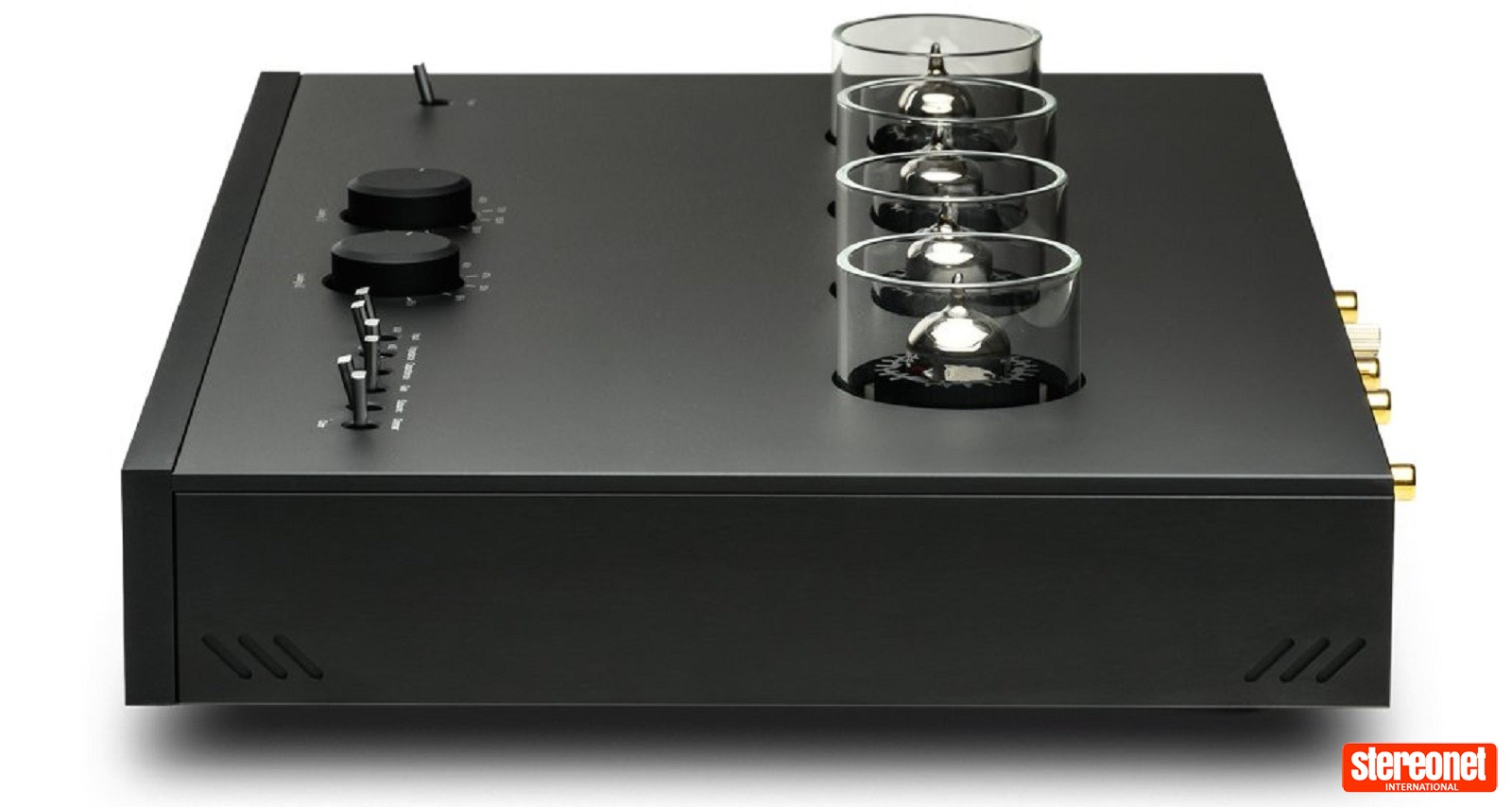
The biggest difference between the two models is the second gain stage. The E-Glo CB uses a hybrid single-ended tube-and-transistor circuit with two ECC83S triodes and one transistor. This stage handles the low-frequency part of the RIAA equalisation and includes a switchable subsonic filter.
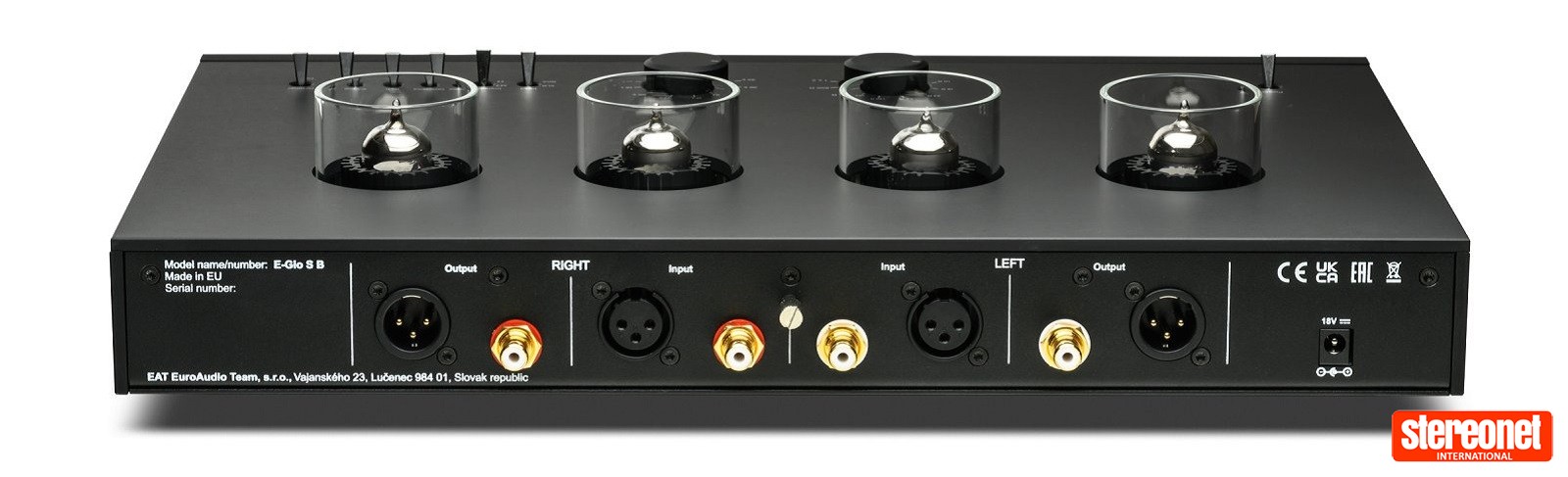
The E-Glo SB goes further. Its second stage is a symmetrical tube circuit using two ECC83S and two E88CC triodes, and EAT specifies higher-grade semi-crystalline hydrocarbon polypropylene capacitors in the gain and RIAA networks.
That matters because the SB maintains a balanced signal through its second gain stage. The CB has a symmetrical MC input stage, common-mode noise rejection and balanced XLR output, but it converts to a single-ended signal before its output stage creates the balanced output. In other words, the CB is balanced where it counts most, but it is not a fully differential design from cartridge to output.
Dialed in
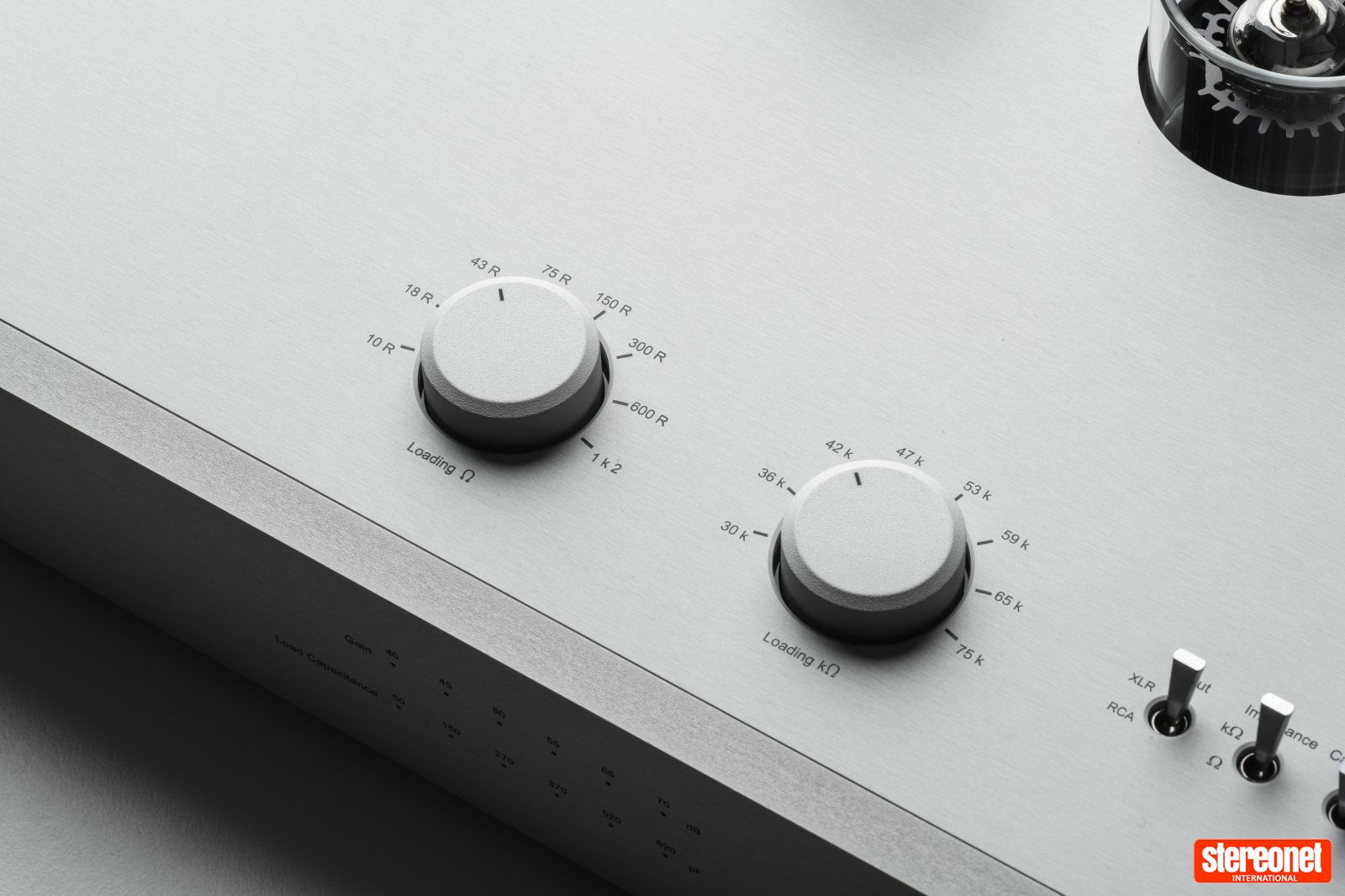
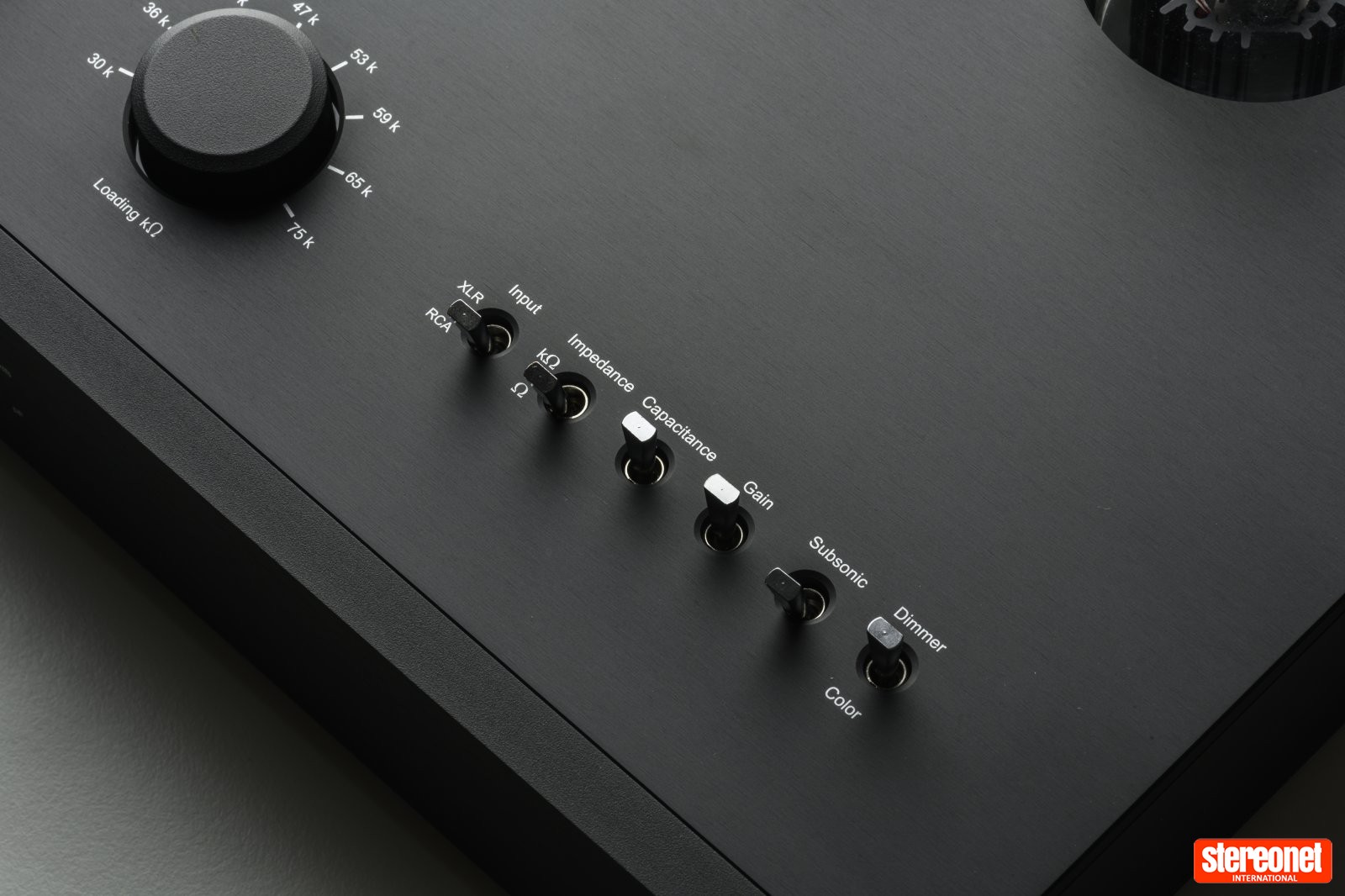
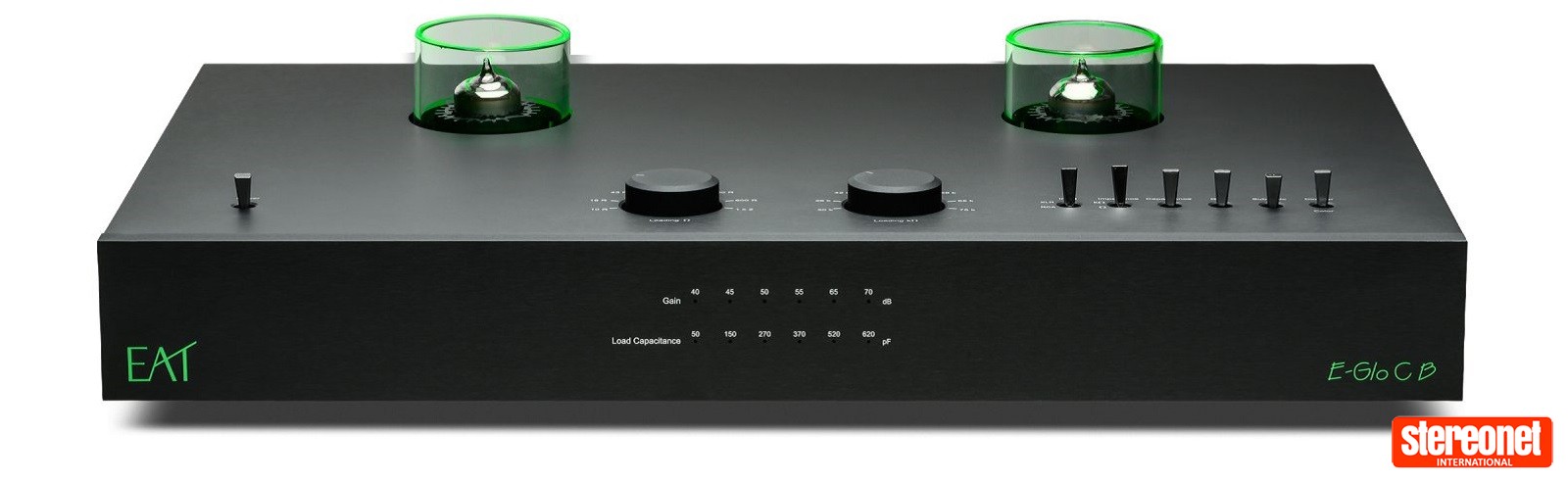
Cartridge adjustment is broad on both models. Moving-magnet resistance can be set from 30,000 to 75,000 ohms, with capacitance settings from 50 to 620 pF. Moving-coil loading runs from 10 ohms to 1.2 kilohms.
Six gain settings are available: 40, 45, 50, 55, 65 and 70 dB. EAT says using the balanced XLR outputs adds another 6 dB.
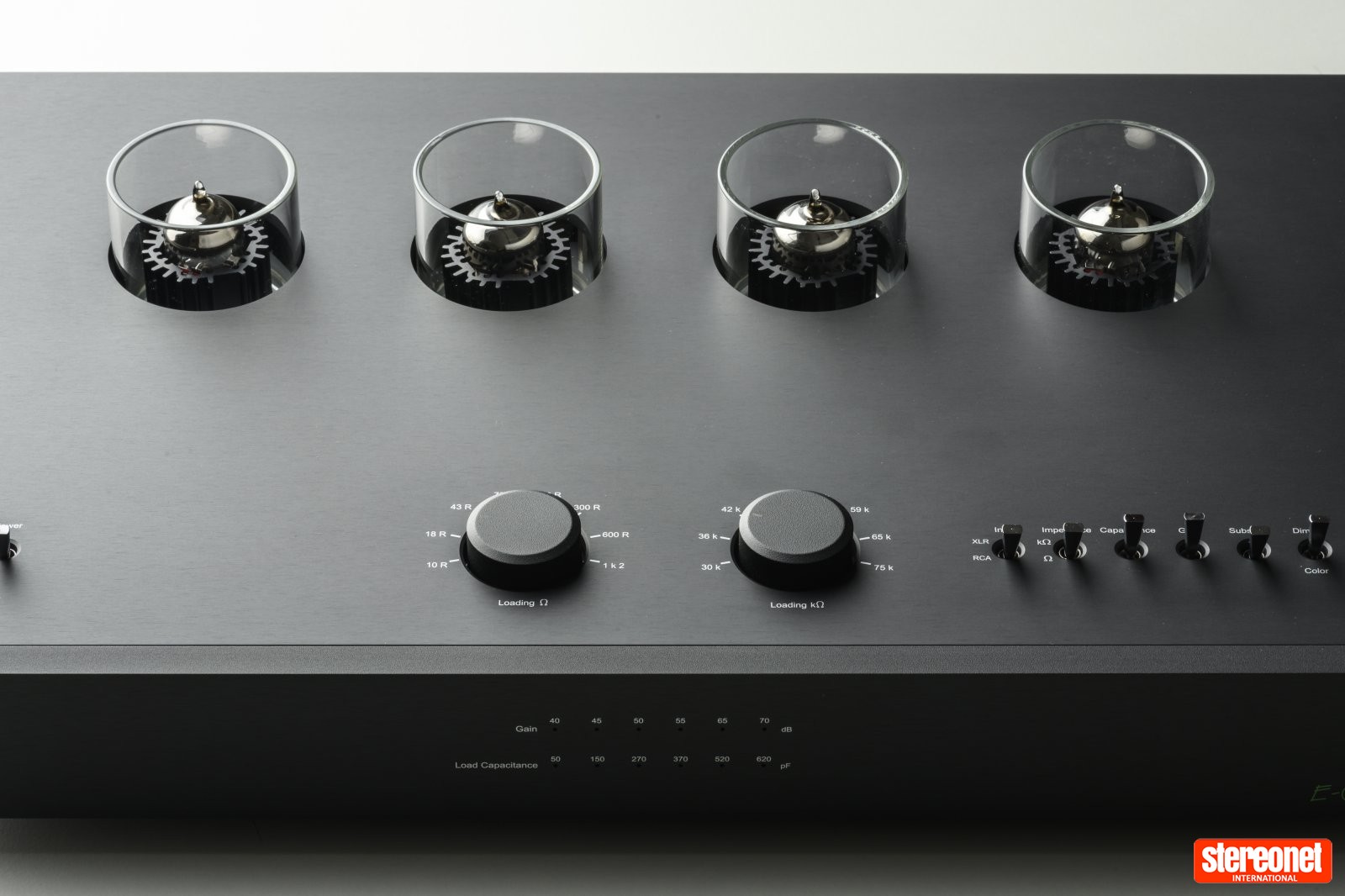
Each model also includes a 20 Hz subsonic filter with an 18 dB-per-octave slope, which should help systems affected by warped records, turntable suspension movement or subwoofers trying to reproduce very low-frequency junk that was never meant to be there.
RIAA accuracy is specified within 0.5 dB from 20 Hz to 20 kHz. The E-Glo CB claims an MM signal-to-noise ratio greater than 92 dBV and an MC figure greater than 80 dBV. The E-Glo SB is rated at greater than 90 dBV for MM and greater than 80 dBV for MC.
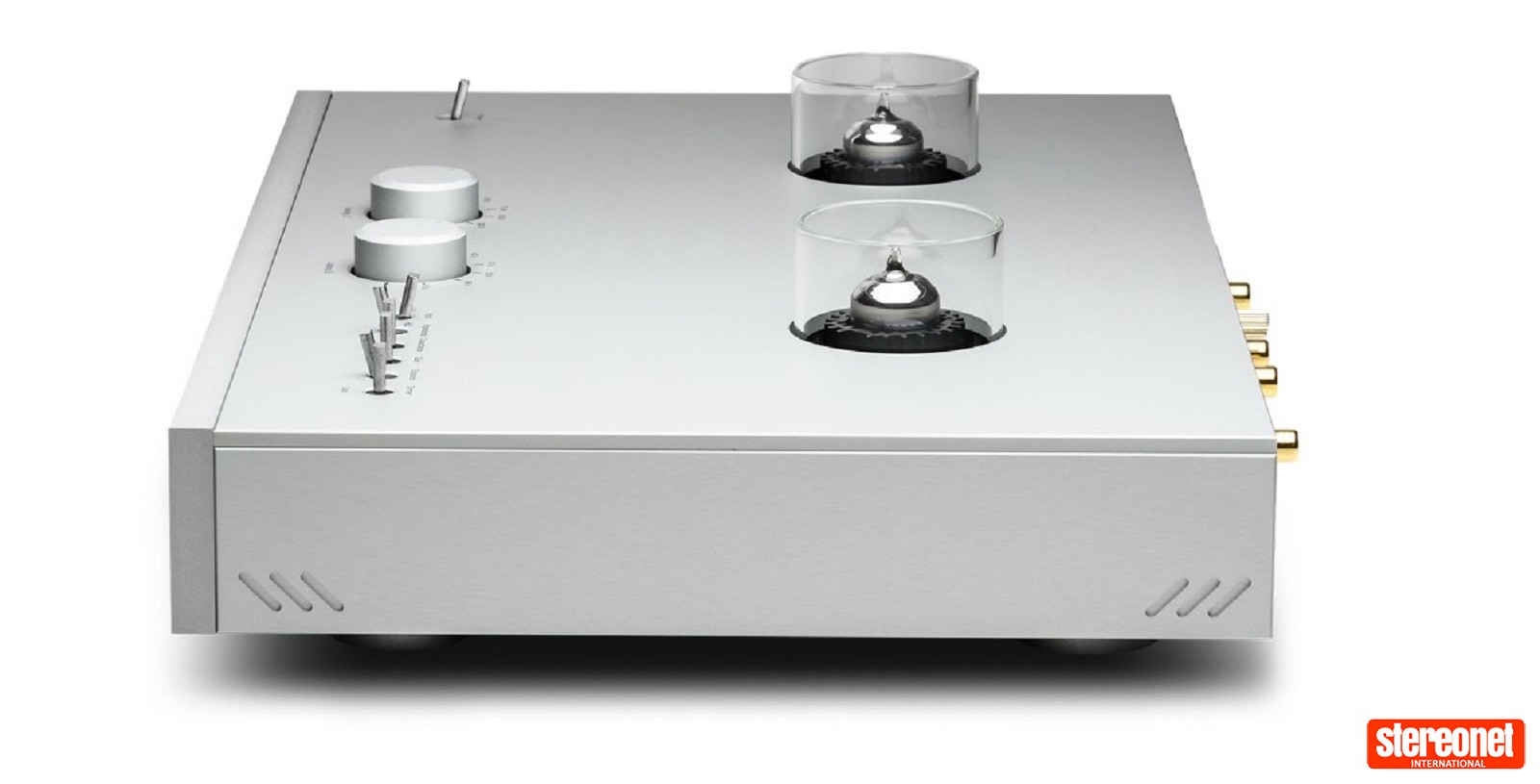
Both units measure 395 x 86 x 262 mm, or 15.6 x 3.4 x 10.3 inches. The E-Glo CB weighs 5 kg, while the E-Glo SB weighs 5.1 kg. Both use an external 18-volt power supply, keeping the transformer away from the tiny cartridge signals the phono stage has to amplify. This also leaves it open to upgrade to the brand’s own EAT LPS 2 linear power supply.
Both of EAT’s new phono stages are now available in North America in black or silver options, with the E-Glo CB priced at US$4,599 and the E-Glo SB at US$6,250. EAT has yet to confirm availability and pricing for other markets.
For more information visit European Audio Team
Gallery

Posted in: Hi-Fi
Join the Discussion
What do you think? Head to the forums and share your thoughts with 100,000+ other community members.
Go to Forums