


Crystal Cable Diamond 2 Piccolo/Diamond 2 Micro Cable Loom Review

David Price auditions a high-end interconnect, speaker cable and power lead package from this prestigious Dutch manufacturer…
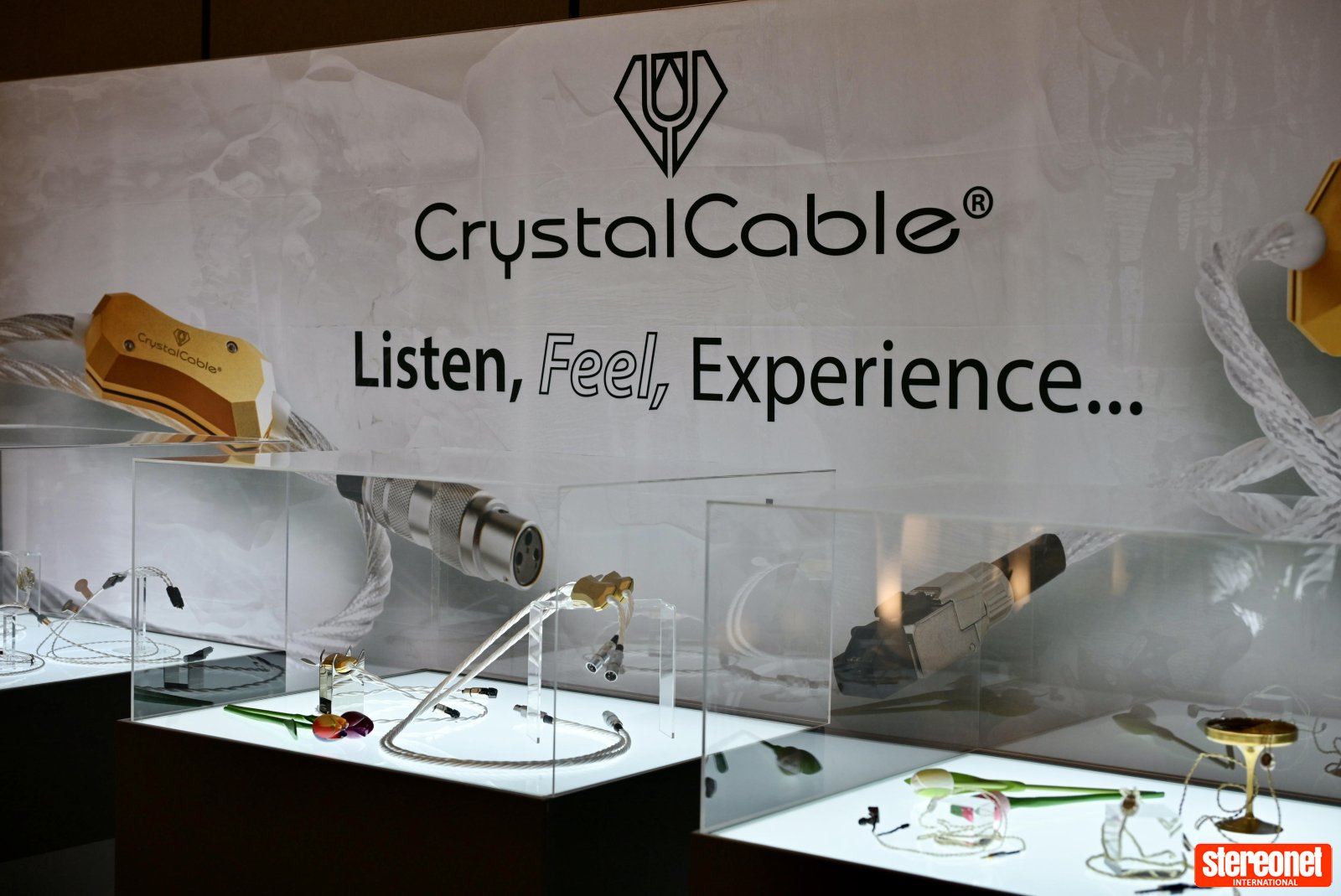
Crystal Cable at Hong Kong High-End Audio & Visual Show 2025
“When I took over this company in 1992”, Edwin Rynveld tells me, “I wanted to kick out cables! I said it’s all nonsense – I’m an engineer with a Master's Degree in electronics – in radio technology – and so I know about cables, and about high frequencies, and a cable is a cable. But, then, people demonstrated to me what they were doing, and I was fascinated. Because I came from the research department at Philips, I wanted to know what was happening and why.” And the rest, as they say, is history.
Edwin (below) has run Siltech ever since, as well as serving as the chief designer of the company’s renowned range of high-end cables. These utilise special metallurgy, construction, dielectric, and insulation materials that are unique in the way they are combined. He says that his designs are totally performance-focused, resulting in some of them being extremely large, thick and/or unwieldy. That’s why, in 2004, the decision was made to create a new brand called Crystal Cable, producing cables that look more at home in one’s living room than in a laboratory. The aim was to achieve as much of the performance of Siltech cables as possible, but in a more domestically acceptable package.

Both companies are part of Netherlands-based International Audio Holdings and share the same technology and underlying design philosophy, but with clearly different priorities in terms of user-friendliness. Edwin leads what is now a large research, development and design team with over forty years of experience.
“I believe we are one of the few companies that really understand what goes right and wrong in cables. We can demonstrate it; we have evolved highly advanced measurement techniques for it.”
He continues: “The biggest problem that we have is that there are many lousy cables on the market, and they all take a share of people’s attention. I would say that nine out of ten brands are bad products and only survive due to the marketing. Our marketing is just average compared to any American or British company, which is really good at it. It’s not very Dutch to be good in this respect. I don’t care if I am number one, two, three or ten, what I want is a company that works well and specialises in super sound quality.”
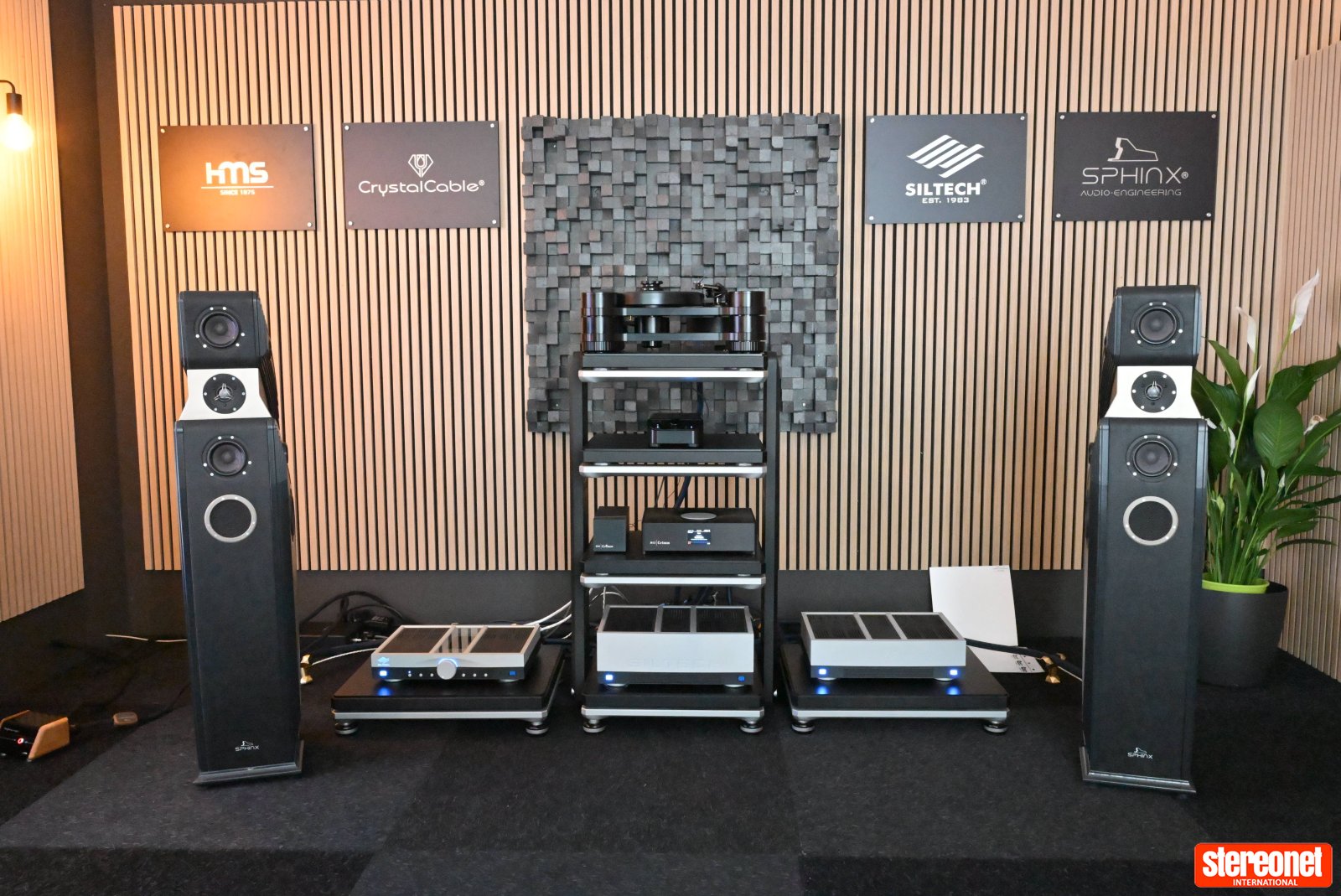
Crystal Cable, Siltech, and HMS with Sphinx Audio Engineering at High End Munich 2025
Both Siltech and Crystal Cable have long had a passionate following, with some of the highest prices (‘residuals’) in the used cable market. They are unapologetically expensive and sell to a specific niche of well-heeled audiophiles who are convinced of their merit. Whilst the products themselves are nicely presented, many far more inexpensive brands provide much more lavish packaging, so it’s not a bling thing.
Edwin says making cables sound good is an expensive business. “To get things right, it costs a lot of money because you come into the sphere of advanced materials. If you want low capacitance, the cable needs to be bigger, and if you want a small cable with low capacitance – such as Crystal Cable’s Diamond 2 – then you have to do complex things using advanced materials, which are very difficult to work with. You have to extrude them on special extruders, for example, and the more performance you want, the more complex it all becomes.”
Up Close
In this review, we’re looking at Crystal Cable’s Diamond 2 Piccolo interconnect (£650 | US$715, 1m) and loudspeaker cables (£1,910 | US$2,150, 3m), and Diamond 2 Micro Power cables (£980 | US$1,095, 1.5m). These are unashamedly premium-priced designs, but by so-called ‘high-end’ standards, their cost is actually quite modest. Of course, that speaks volumes about high-end hi-fi, but the point is that this loom is still just about within reach for well-heeled audiophiles; it’s not quite lottery winner or movie star territory in terms of pricing.

What you get for your money is a set of well-made, attractive and understated-looking cables. No day-glo shell-suit sheath colours here, and the connectors are quality items but not ludicrously large and hard to use. The sheathing is semi-translucent, revealing the silver-plated copper shielding within – and under this is Crystal Cable’s ‘special sauce’, so to speak, namely its ninth generation of silver-gold conductors. Whereas the Teflon in the cable’s dielectric is bought directly from its original inventor, DuPont, Crystal Cable’s metallurgy is totally bespoke – and developed in-house by Edwin and his team.

The company’s life’s work has been the development of metal conductors with the best possible electrical characteristics for signal transmission. SG2, as it’s called internally, is the best conductor that Crystal Cable (and Siltech) knows how to make. Edwin shares that his research shows that when gold is mixed with silver conductors, signal transmission is improved.

“The atoms in the conductor fall into the right place in the lattice, which causes the conductor to get even better as time passes.”
This latest silver-gold alloy is the result of twenty years of research and development, apparently.

In the Diamond 2 range, not only has the metallurgy improved, but so has the construction of the cable itself. It retains the original Diamond’s coaxial configuration, which is said to give excellent shielding against external magnetic fields. The use of Kapton and Teflon – the highest purity types made by Dupont rather than generic Chinese copies – in the cable dielectric is also critical to the overall performance, explains Edwin. His research has shown that it has the best properties for insulation, and this in turn strongly impacts the final sound, especially at the top end. The outer jacket is a highly flexible variation of Teflon, which is especially important for Crystal Cable, whose remit is to be system-friendly.

While sharing the same metallurgy, dielectric, braiding and sheathing, the Diamond 2 series does have subtle differences related to the application. So the Diamond 2 Piccolo interconnect has single coaxial construction, for example, whereas the loudspeaker cable version has double coax. As you would expect, due to its higher current capability, the Diamond 2 Micro Power uses three complete coaxial cables.

For the purposes of this review, the interconnect was 1m long, the speaker cables 3m each, and the power cable 1.5m. Crystal Cable can, of course, supply products of bespoke lengths if the customer so wishes. I used these wires in several systems, the main one being my Chord Electronics TT2 DAC, Sony TA-E86B preamp and twin Sony TA-N86B monoblocks driving Yamaha NS-1000M loudspeakers. Optimal results came when the Piccolo RCA interconnect went between the DAC and preamp, and the Micro Power fed the preamp. They replaced my much-loved and similarly expensive combination of Furutech power chords and Townshend Audio DCT interconnects and speaker leads.
The Listening
The objective of any cable is to transmit the electrical signal with the minimum of distortion and the least possible external noise ingress. That means that the conductors, the dielectric and the shielding all have a job of work to do. Given that these vary a lot across cable brands, this explains why cables can sound so different. In the case of this Crystal Cable loom, it’s highly transparent – showing great clarity, purity and insight. You get a vivid sense of the music being unveiled and/or revealed, as if a clean white light is being shone upon the recording. Yet the sound is never harsh if the system itself is intrinsically right.

This translates into highly authentic tonality, with crisp, taut bass notes, a glass-clear midband and silky treble with sparkling harmonics. You also hear a starker contrast between the quietest and loudest parts of the music, and a more open and immersive soundstage with better spatial location of instruments. For example, compared to my reference cable loom, the classic rock of Turn It On Again by Genesis lost its slightly thin and opaque quality that I’d always associated with this song.

Never a great recording – especially compared to the band’s efforts of five or so years earlier – this track immediately gained substance and definition. I had considered it to be a dry and wiry-sounding track that lacked physicality and bite, but suddenly, there was more punch to snare and bass drums, while vocals sounded more impassioned. Although the recording was still quite compressed – because it was mixed for FM radio – the spaces between the notes appeared quieter and darker, giving the actual playing more impact.
This Crystal Cable loom also works its magic in the time domain. The Genesis track gained a sense of urgency and drive that wasn’t so apparent previously, as did Alex Reece’s Feel The Sunshine. This is a crunching mid-nineties drum’n’bass track with super-supple, high-speed rhythms. The Diamond 2 cables pepped things up more than anticipated, with a much snappier feel to the electronic percussion work – the leading edges of snare and hi-hats felt faster and more visceral. Given the complex percussive patterns found in this track, the result was a mesmerising sound that made the song seem more frantic – yet not harsh. To back these findings up, I cued up Mark Ronson’s Bang Bang Bang – a lively slice of modern electro pop, and this too sounded more impactful and engaging without getting harder or more shrill.

There’s nothing like artfully recorded classical music to show what a system can do, and so my favourite reading of Beethoven’s 6th Symphony (Karajan, Berlin Philharmonic) was deployed. The Crystal Cable loom brought about an instantly noticeable improvement, with more lustre to orchestral instruments and greater space and depth to the recorded acoustic. What had previously been a respectably wide window into the concert hall appeared to vanish completely, opening up the music and letting the sound of the orchestra flood forth. The clearly defined spatial positioning of the players suddenly shone through, as if someone had pressed the autofocus button on a good camera. Even the smallest of details snapped into place. The result was a rendition of the allegro ma non troppo that pulled me right in, with a far more tactile and visceral sound before my very ears.

So which part of the cable loom had the greatest effect? In my main system, it was clearly the interconnect going from my DAC to the preamp, but in my second one, loudspeaker cables clearly improved things the most. So the subjective changes you get are clearly a function of what cables you’re currently running, and also of how good your basic system is. Yet the Crystal Cable loom consistently delivered better performance than my hand-chosen, and similarly priced cables. As ever then, no cable is a magic bullet – you need good sources and amplification to realise meaningful improvements. In my experience, this loom would begin to do serious good in a system of around £10,000 or higher. Before that, you’d likely be better served getting your basic choice of kit right.
The Verdict
 I do wonder when people tell me that “all cables sound the same”. Maybe their hearing isn’t as good as it should be, or their systems are simply too poor to signpost the difference? Whatever, you’d have to be wearing earmuffs not to hear the difference that this cable loom brought to my already fine-sounding system. The improvement was stark, and each part of the equation played its part.
Importantly, the subjective improvement wasn’t simply a case of these cables embellishing the sound or matching the ancillaries better, but rather it was clear they were letting a purer music signal through to the loudspeakers. As such, I’d strongly urge you to audition Crystal Cable’s Diamond 2 Piccolo interconnect and loudspeaker cables, and Diamond 2 Micro Power cables. They make up an expensive package, but I’ve heard far pricier products that don’t even come close in terms of performance.
For more information visit Crystal Cable
Gallery


David Price
David started his career in 1993 writing for Hi-Fi World and went on to edit the magazine for nearly a decade. He was then made Editor of Hi-Fi Choice and continued to freelance for it and Hi-Fi News until becoming StereoNET’s Editor-in-Chief.
Posted in: Accessories | Cables | Applause Awards | 2025 | Hi-Fi | StereoLUX!
JOIN IN THE DISCUSSION
Want to share your opinion or get advice from other enthusiasts? Then head into the Message
Forums where thousands of other enthusiasts are communicating on a daily basis.
CLICK HERE FOR FREE MEMBERSHIP
Trending
 1
1Focal and Naim Have a New Owner — and It’s Not Who You’d Expect
 2
2Focal-Naim Under Barco – A New Dawn?
 3
3Cabasse Falls: Iconic French Audio Brand Enters Receivership After 75…
 4
4Why Loewe Is Ditching Samsung Tizen for Hisense's VIDAA — and What…
 5
5Best Headphones 2026 - Our Picks from the Latest Reviews and Product…